
Definition of the visible spectrum
Our laset product
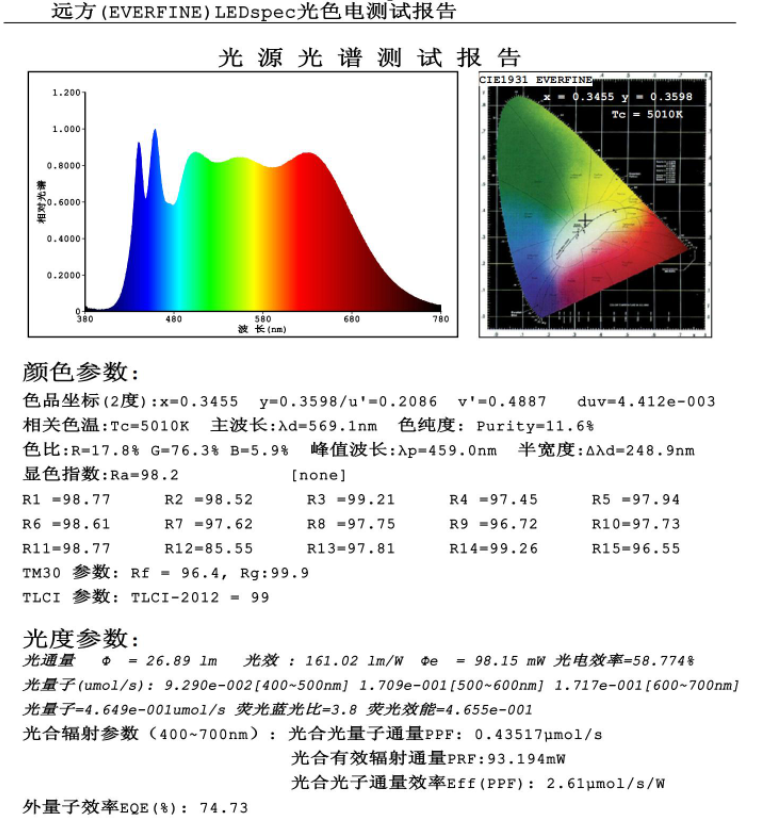
Spectrum
A spectrum is the pattern formed when polychromatic light is dispersed by a dispersive system (such as a prism or grating), with the dispersed monochromatic light arranged in order of wavelength (or frequency). The following provides a detailed introduction to the definition, generation principles, classification, and applications of spectra:
Definition
A spectrum is a distribution pattern in which electromagnetic radiation is arranged in order of wavelength or frequency. It reflects information about the internal structure and motion of matter and is an important means of studying the microscopic world of matter.
Generation principles
- Emission spectrum: When atoms, molecules, or ions are in an excited state, they transition to lower energy levels and simultaneously release energy in the form of photons. Different energy level transitions correspond to photons of different frequencies (or wavelengths), thereby forming an emission spectrum. For example, when a neon lamp is powered on, it emits light of various colors because the gas atoms inside the tube are excited and produce an emission spectrum.
- Absorption spectrum: When a continuous spectrum passes through a certain substance, the atoms and molecules in the substance absorb photons of specific frequencies, causing light of certain wavelengths in the continuous spectrum to be absorbed and producing dark lines or dark bands, thereby forming an absorption spectrum. For example, the dark lines in the solar spectrum are formed when the continuous spectrum emitted from the interior of the sun passes through the sun's atmosphere and is absorbed by various elements in the atmosphere.
Classification
Classification by generation method
- Emission spectrum
- Continuous spectrum: Contains light of all wavelengths from a certain short-wavelength limit to a long-wavelength limit, and is produced by the luminescence of incandescent solids, liquids, or high-pressure gases. For example, the light emitted by an incandescent filament is a continuous spectrum.
- Bright line spectrum: It is composed of some discontinuous bright lines, which correspond to light of specific wavelengths and are produced by the luminescence of thin gases or metal vapors. Each element has its own unique bright line spectrum, just like a person's fingerprint, so the elements contained in a substance can be determined by analyzing the bright line spectrum.
- Absorption spectrum: Some dark lines or dark bands appear on the background of a continuous spectrum, and these dark lines or dark bands correspond to light of specific wavelengths absorbed by the substance. Absorption spectra can also be used to analyze the composition of substances, because the absorption spectra of different elements correspond one-to-one with their emission spectra.
Classification by the properties and characteristics of spectra
- Infrared spectrum: The wavelength range is between 0.76μm and 1000μm, and it is mainly used to study molecular vibrational and rotational energy level transitions. In chemical analysis, infrared spectroscopy can be used to determine the structures and functional groups of organic compounds; in the medical field, infrared spectroscopy can be used for the diagnosis and monitoring of diseases.
- Visible spectrum: The wavelength range is between 380nm and 760nm, and it is the spectral region that the human eye can directly see. Light of different wavelengths corresponds to different colors, from short wavelengths to long wavelengths in order: violet, blue, cyan, green, yellow, orange, red.
- Ultraviolet spectrum: The wavelength range is between 10nm and 380nm, and it is mainly used to study electronic transitions in molecules. In organic chemistry, ultraviolet spectroscopy can be used to detect conjugated systems and aromatic compounds; in biology, ultraviolet spectroscopy can be used for the quantitative analysis of DNA and proteins.
- X-ray spectrum: The wavelength range is between 0.01nm and 10nm, and it is produced when high-speed electrons strike a metal target. X-ray spectroscopy has a wide range of applications in materials science, medical diagnosis, crystal structure analysis, and other fields.
- Microwave spectrum: The wavelength range is between 1mm and 1m, and it is mainly used to study molecular rotational energy level transitions and paramagnetic resonance, etc. In the field of communications, microwave spectroscopy is used in satellite communications, radar, and other technologies.
Applications
Environmental monitoring: Spectroscopy can be used to monitor pollutants in the atmosphere, water, and soil. For example, UV-visible absorption spectroscopy can monitor heavy metal ions and organic pollutants in water; Raman spectroscopy can be used for real-time monitoring of harmful gases in the atmosphere. finibus, orci in vestibulum efficitur, urna sapien mattis tortor.
Astronomy: By analyzing the spectra of celestial bodies, astronomers can learn about their chemical composition, temperature, density, velocity, and other information. For example, through analysis of the solar spectrum, scientists discovered that the sun contains elements such as hydrogen and helium.
Chemical analysis: Spectral analysis is one of the commonly used methods in chemical analysis and can be used for qualitative and quantitative analysis of substance composition. For example, atomic absorption spectroscopy can accurately determine the content of various elements in a sample; infrared spectroscopy can be used to identify the structure of organic compounds.
Medical diagnosis: In the medical field, spectroscopy is widely used in the diagnosis and treatment of diseases. For example, laser-induced fluorescence spectroscopy can be used for early cancer diagnosis; near-infrared spectroscopy can be used to monitor blood oxygen levels in human tissue.