
Visible Light Full Spectrum Popular Science Knowledge

2022-04-29 · Technical Q&A

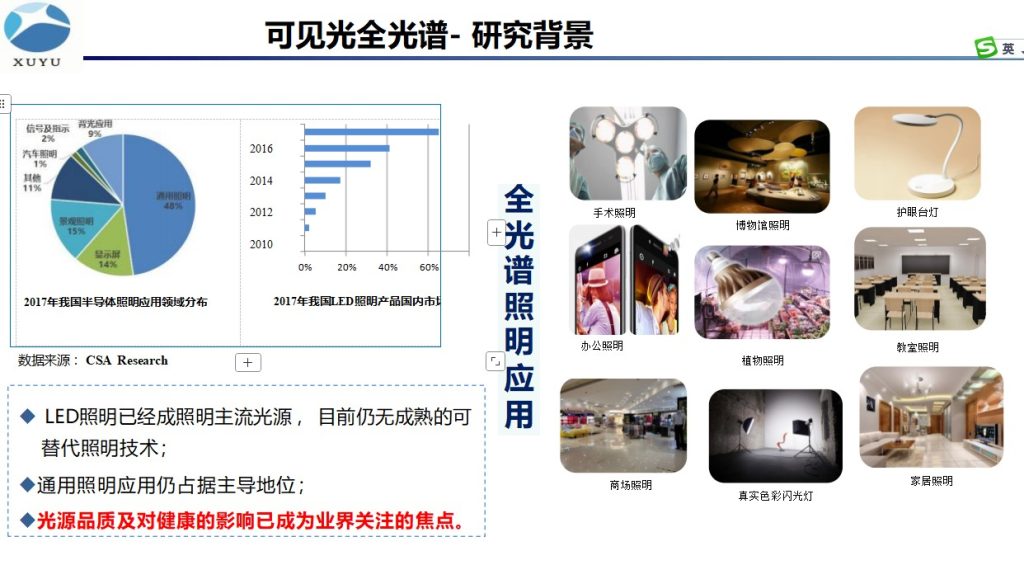
I. Visible light full spectrum - Research background LED lighting has become the mainstream light source in lighting, and there is still no mature alternative lighting technology; general lighting applications still occupy a dominant position; the quality of light sources and their impact on health have become a focus of industry attention. II. Close to the natural spectrum, with good spectral continuity

Quick Answer

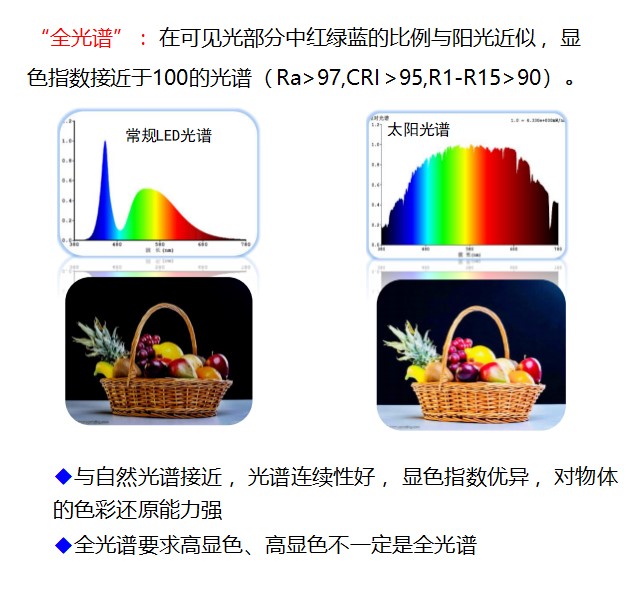
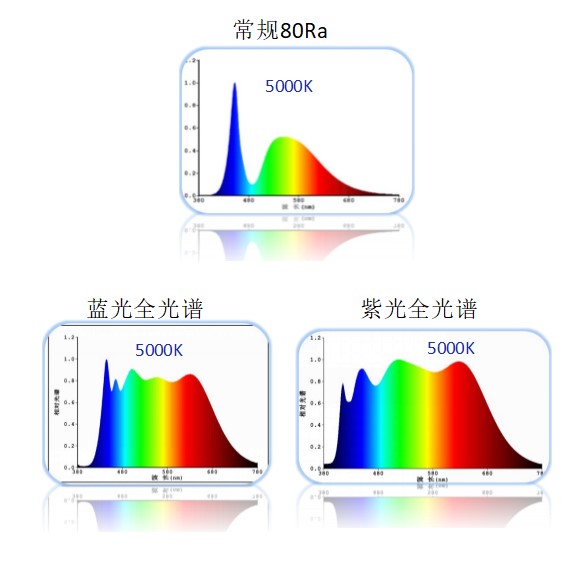
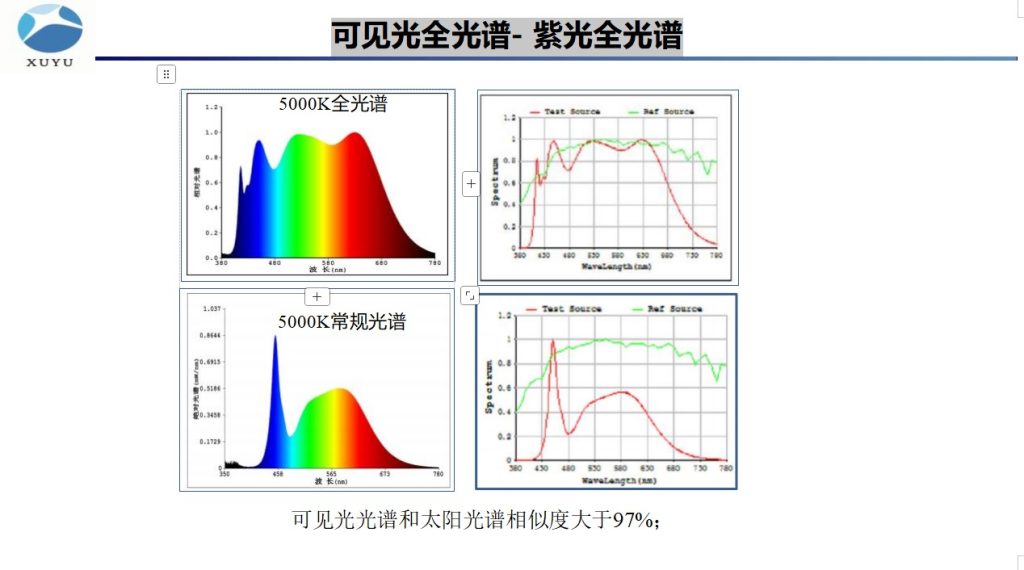
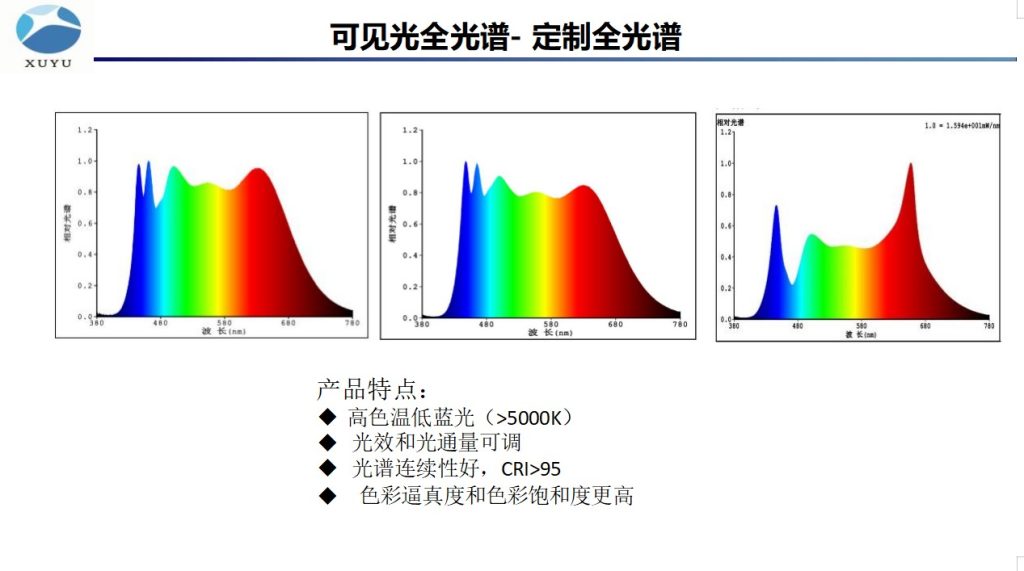
The core of full-spectrum lighting is a spectrum close to natural light, good spectral continuity, an excellent color rendering index, and strong color reproduction for objects. However, high color rendering does not necessarily mean full spectrum. Currently, the main technologies for achieving full-spectrum lighting include single-blue full-spectrum LED chips, dual-blue full-spectrum, and violet full-spectrum.

I.Visible Light Full Spectrum - Research Background

  • LED lighting has become the mainstream light source in lighting, and there is still no mature alternative lighting technology;
  • General lighting applications still occupy a dominant position;
  • uLight source quality and its impact on health have become the focus of the industry.
II. Close to natural spectrum, good spectral continuity, excellent color rendering index, strong ability to restore object colors

  • Full spectrum requires high color rendering; high color rendering is not necessarily full spectrum
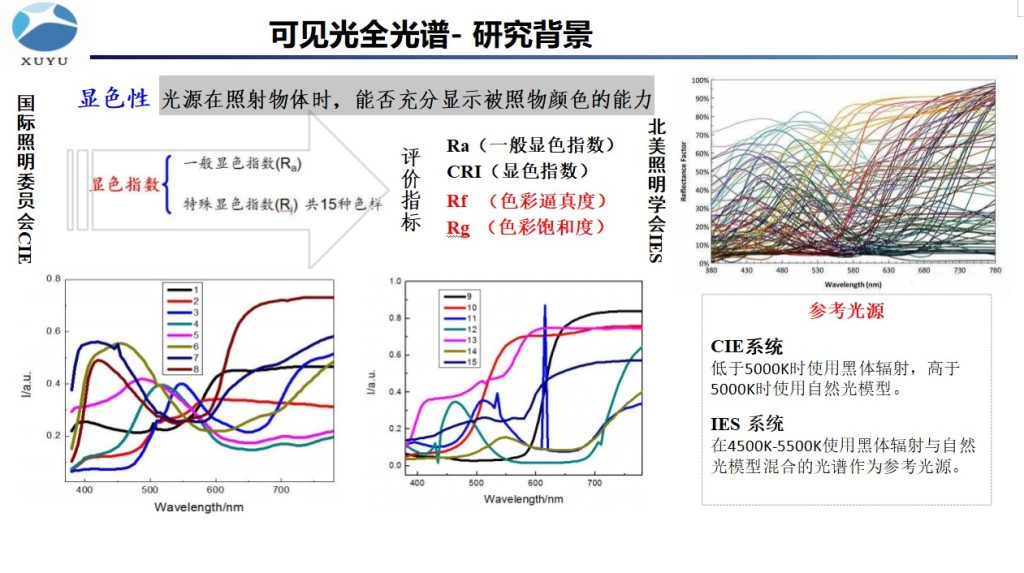
  • Color rendering:The ability of a light source to fully display the color of an illuminated object when illuminating it
Main technologies currently used to achieve full-spectrum lighting
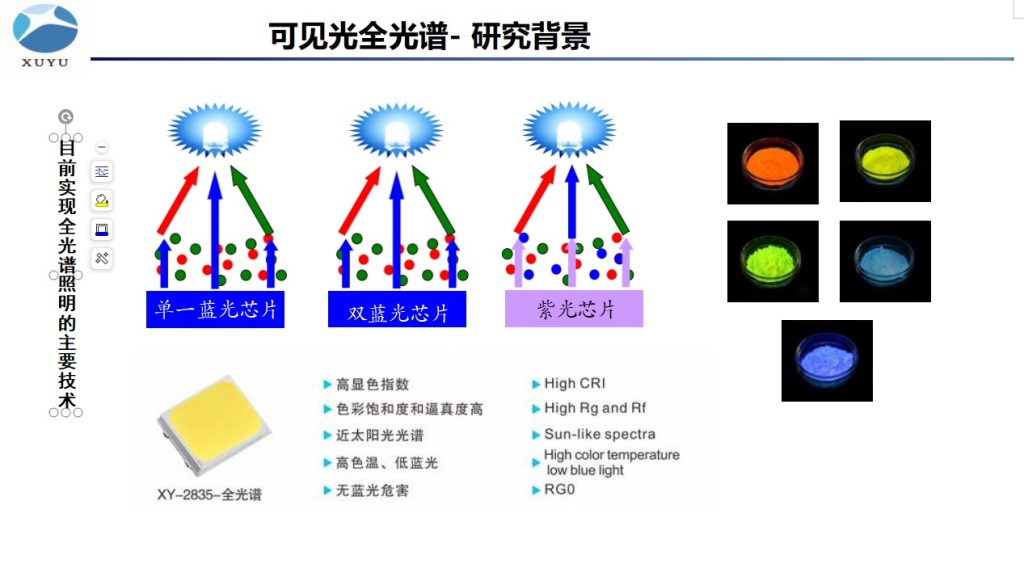
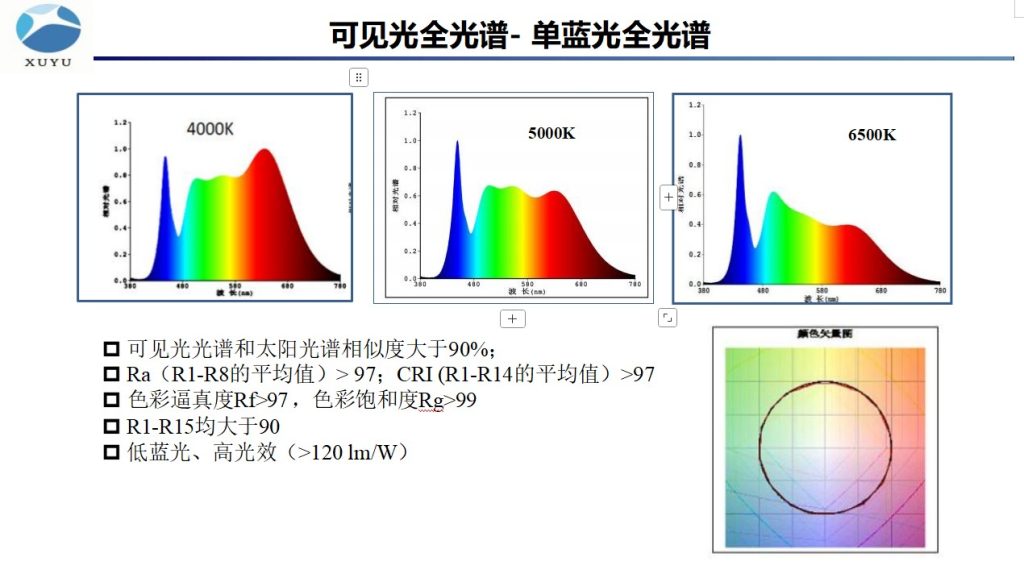
Single blue light full-spectrum LED chip
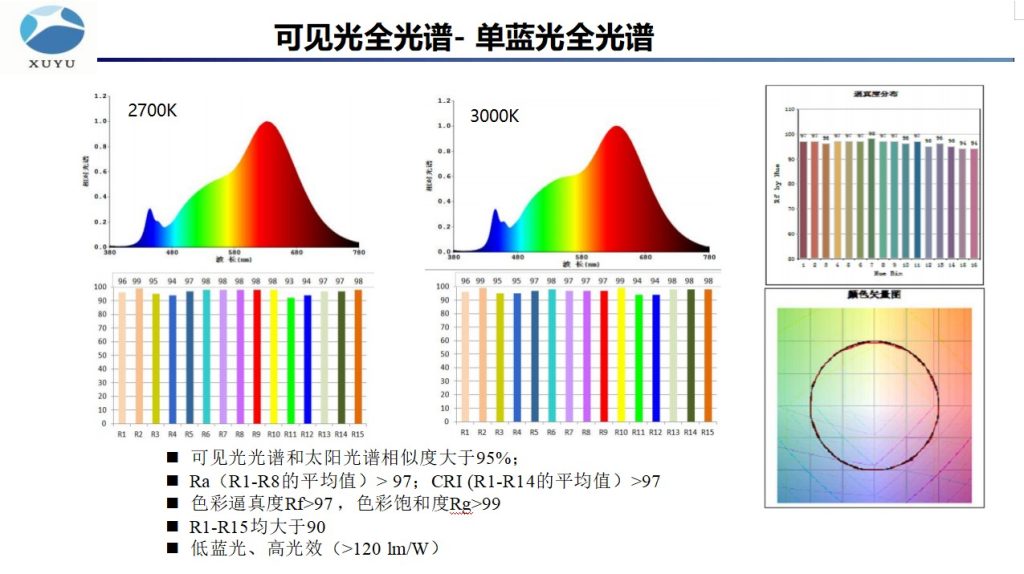
Visible light full spectrum
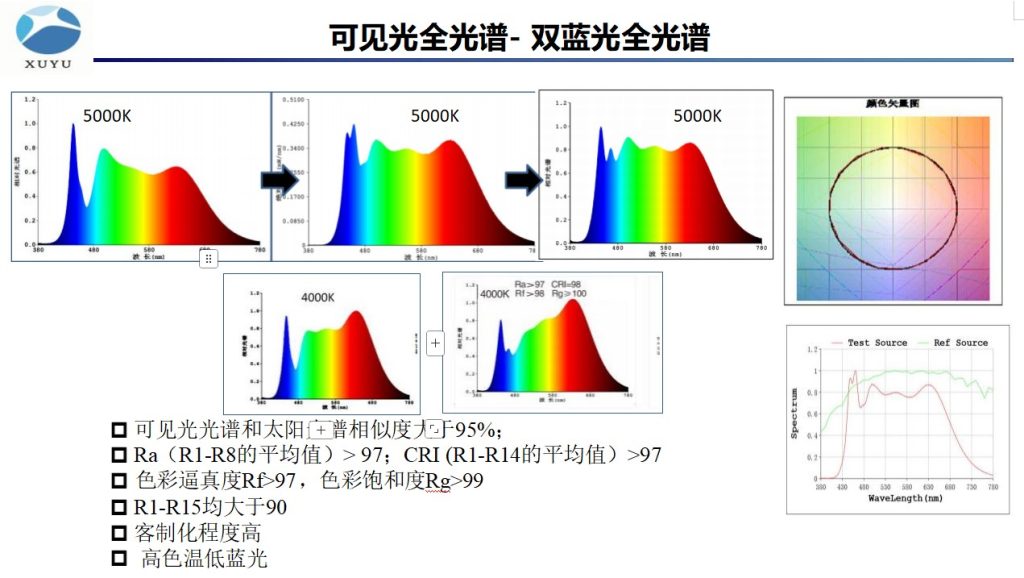
Visible light full spectrum - dual blue light
Visible light full spectrum - violet light full spectrum
Full-spectrum light source

Frequently Asked Questions

What exactly is the difference between full-spectrum lamps and ordinary LED lamps?
The difference lies in spectral continuity. Full spectrum is close to the natural spectrum, has good spectral continuity, an excellent color rendering index, and strong color reproduction for objects. Although ordinary LED lighting is already the mainstream light source, light source quality and its impact on health are the focus of industry attention.
Does a high color rendering index necessarily mean full spectrum?
Not necessarily. Full spectrum requires high color rendering, but high color rendering is not necessarily full spectrum. Color rendering only indicates whether a light source can fully show the colors of an object when illuminating it, while full spectrum also requires the spectrum to be close to the natural spectrum with good continuity.
What technical routes are currently available for full-spectrum lighting?
Currently, the main technologies for achieving full-spectrum lighting include single-blue full-spectrum LED chips, visible-light full-spectrum dual-blue, and visible-light full-spectrum violet full-spectrum, with the final product form being a full-spectrum light source.
Why is the lighting industry now emphasizing light source quality and health?
Because LED lighting has become the mainstream light source in the lighting industry, and there is still no mature alternative lighting technology, general lighting applications continue to dominate, so light source quality and its impact on health have become a focal point of industry attention.