1. How exactly should IP ratings be understood?
IP (Ingress Protection) ratingis a protection rating standard established by the International Electrotechnical Commission (IEC), consisting of two digits:
- The first digit (0-6): Dust protection rating. 6 means completely dust-tight, which is the minimum threshold for outdoor luminaires.
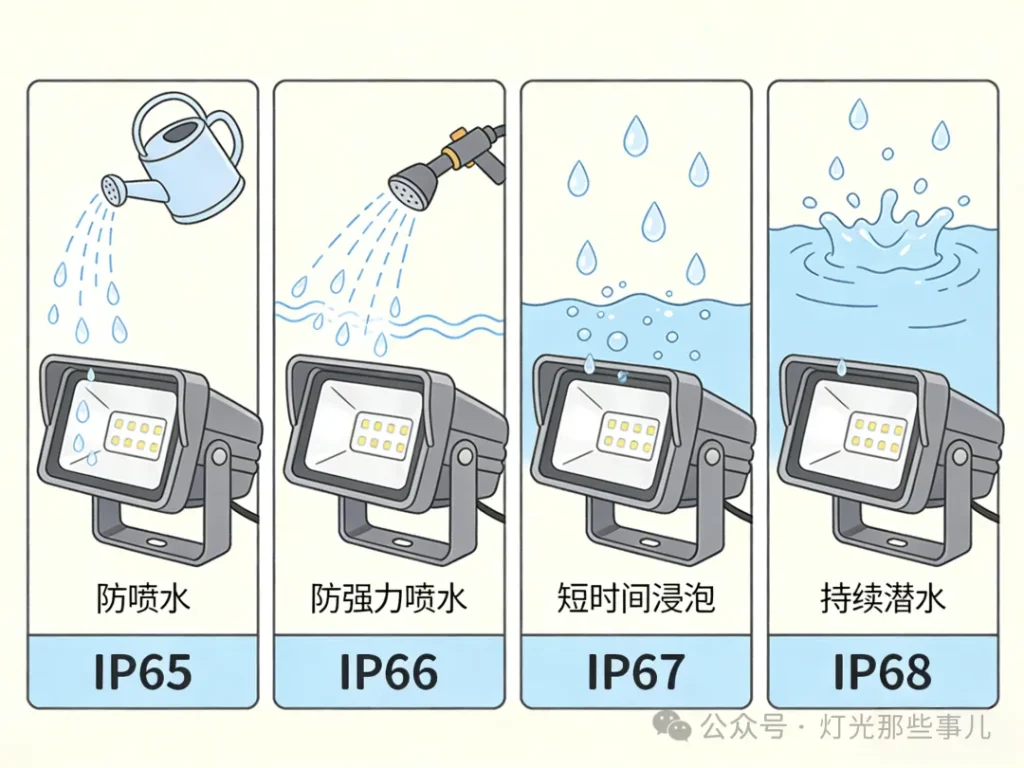
- The second digit (0-8): Water protection rating. 5-8 correspond to different levels of water resistance:
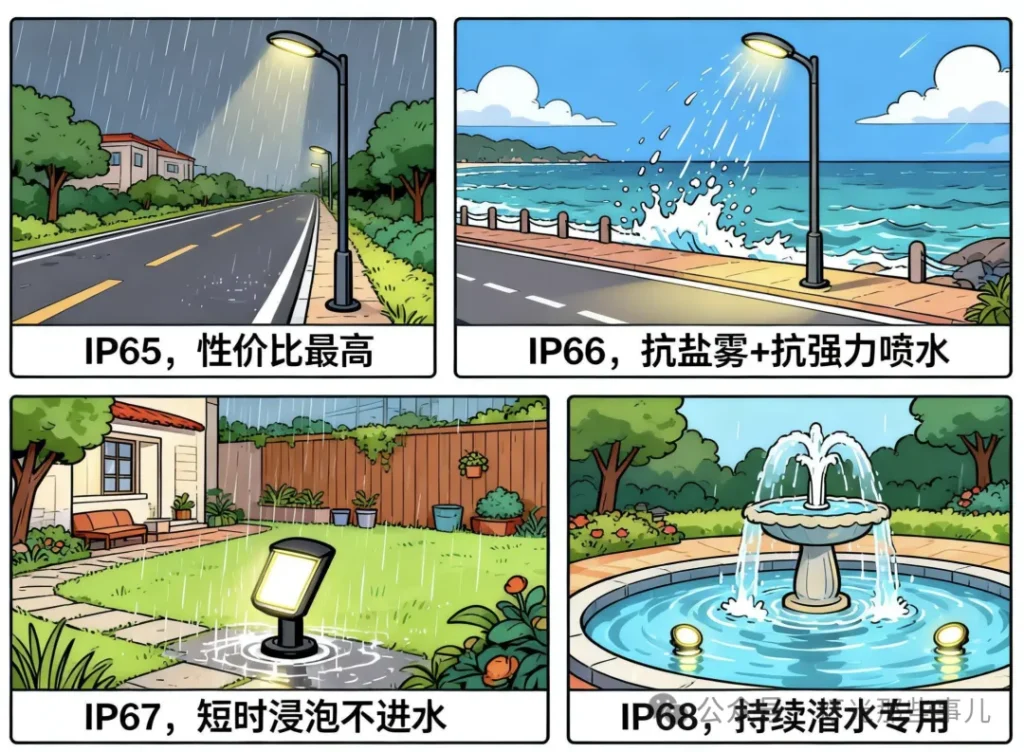
- IP65: Protected against water jets (water sprayed from any direction has no harmful effect)
- IP66: Protected against powerful water jets (such as waves, high-pressure water guns)
- IP67: Protected against short-term immersion (immersion at 1 meter depth for 30 minutes)
- IP68: Protected against continuous submersion (at the depth and duration specified by the manufacturer)
Once you understand the second digit, you know how much water this luminaire can withstand.
2. Why do IP65, 66, 67, and 68 differ so much in price?
Differences in water protection ratings are directly reflected in structural design and material costs:
IP65 (water spray resistant)
- Structure: basic sealing ring + waterproof connector
- Application: general outdoor, rain exposure but no standing water
- Cost baseline: lowest
IP66 (strong water jet resistant)
- Structure: thickened sealing ring + double waterproof structure
- Application: seaside, typhoon areas, high-pressure washing locations
- Cost: 15%-20% higher than IP65
IP67 (short-time immersion)
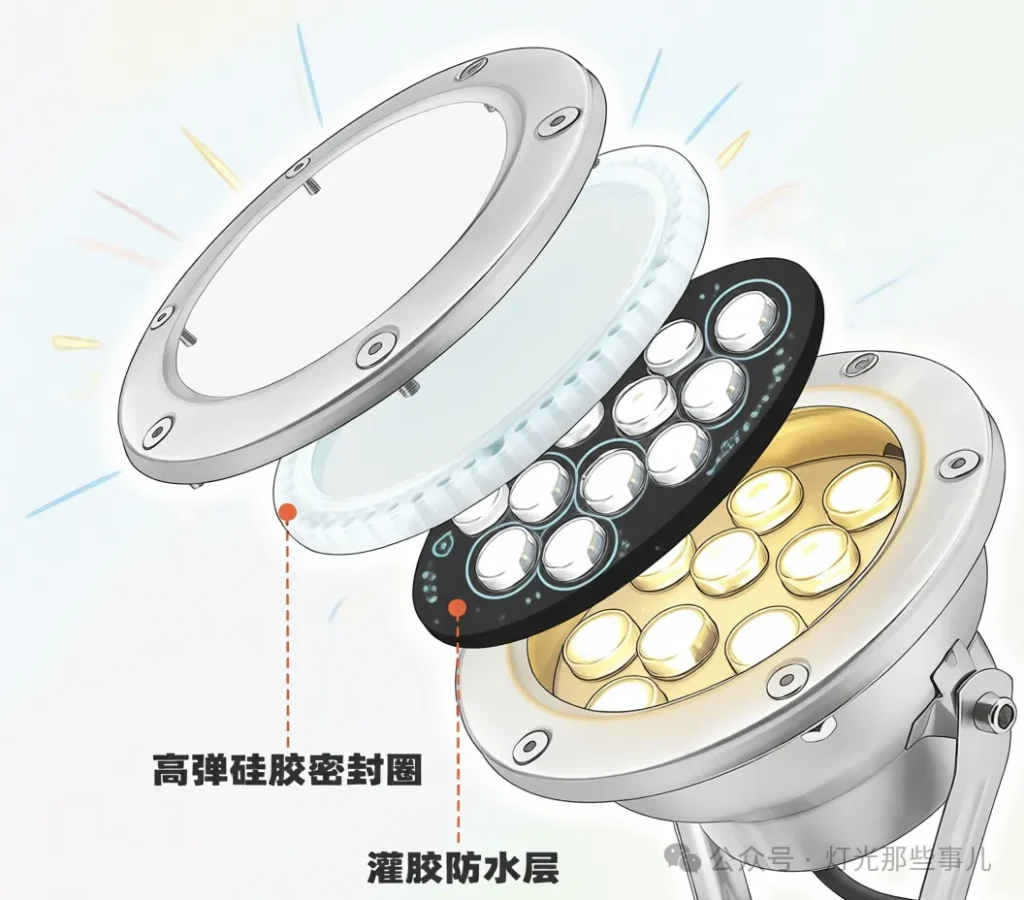
- Structure: fully sealed design + potting or secondary encapsulation
- Application: areas prone to water accumulation, short-time submersion (e.g. ground water accumulation after heavy rain)
- Cost: 30%-40% higher than IP65
IP68 (continuous submersion)
- Structure: fully sealed + potting + thickened housing + underwater dedicated cable
- Application: underwater landscapes, fountains, swimming pools
- Cost: more than double that of IP65
Key misconception: IP67 is not necessarily better than IP66. IP67 tests static water immersion, while IP66 tests high-pressure water jets; the two have different test conditions. Coastal typhoon areas need IP66's resistance to water jet impact, not IP67's immersion resistance.
III. Which rating should be chosen for different projects?
In practical applications, the choice of waterproof rating directly determines cost reasonableness and product lifespan:
- Road lighting, garden lights, general outdoor wall lights: IP65 is sufficient. Luminaires are installed high up, exposed only to rain and not to standing water, so there is no need to spend more.
- Seaside, coastal highways, bridges: IP66 is recommended. Not only waterproofing, but also the corrosiveness of seawater spray must be considered; IP66's sealed structure is tighter.
- Areas prone to water accumulation, underground passages, garage entrances and exits: IP67 is a must. Short-term flooding may occur during heavy rainstorms, and IP65 cannot withstand it.
- Underwater landscapes, fountains, swimming pools, water feature lights: IP68 is a must. And the manufacturer's tested depth (generally 1 meter or 3 meters) and duration (continuous operation) must be clearly specified.
- Wall washers, linear lights (ground-mounted): IP67 is recommended. Although the product itself is IP65, ground-mounted installation is prone to water accumulation, so IP67 is advisable to be on the safe side.
Pitfall Avoidance Guide:
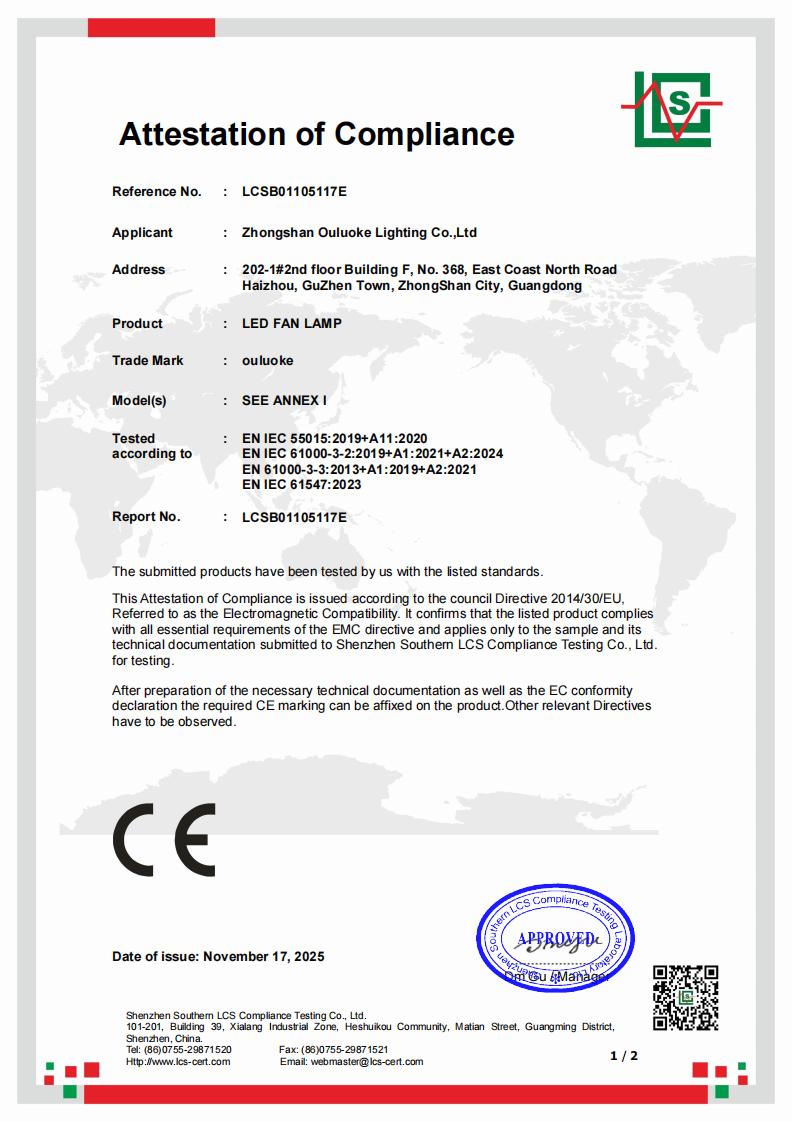
- Ask forIP rating test reports, check whether the testing institution is legitimate
- Clarify the test conditions for IP68 (what water depth, how long)
- IP66 and IP67 have different application scenarios, don't just look at the number
- The higher the waterproof rating, the worse the heat dissipation usually is (fully sealed), confirm whether the power needs derating
- Simply put,IP65, 66, 67, 68 have no absolute good or bad, only whether they are suitable. Choose right, cost is controllable and lifespan meets standards; choose wrong, either waste budget or wait for after-sales rework. Understand the application scenario, then select according to parameters.
—— End ——